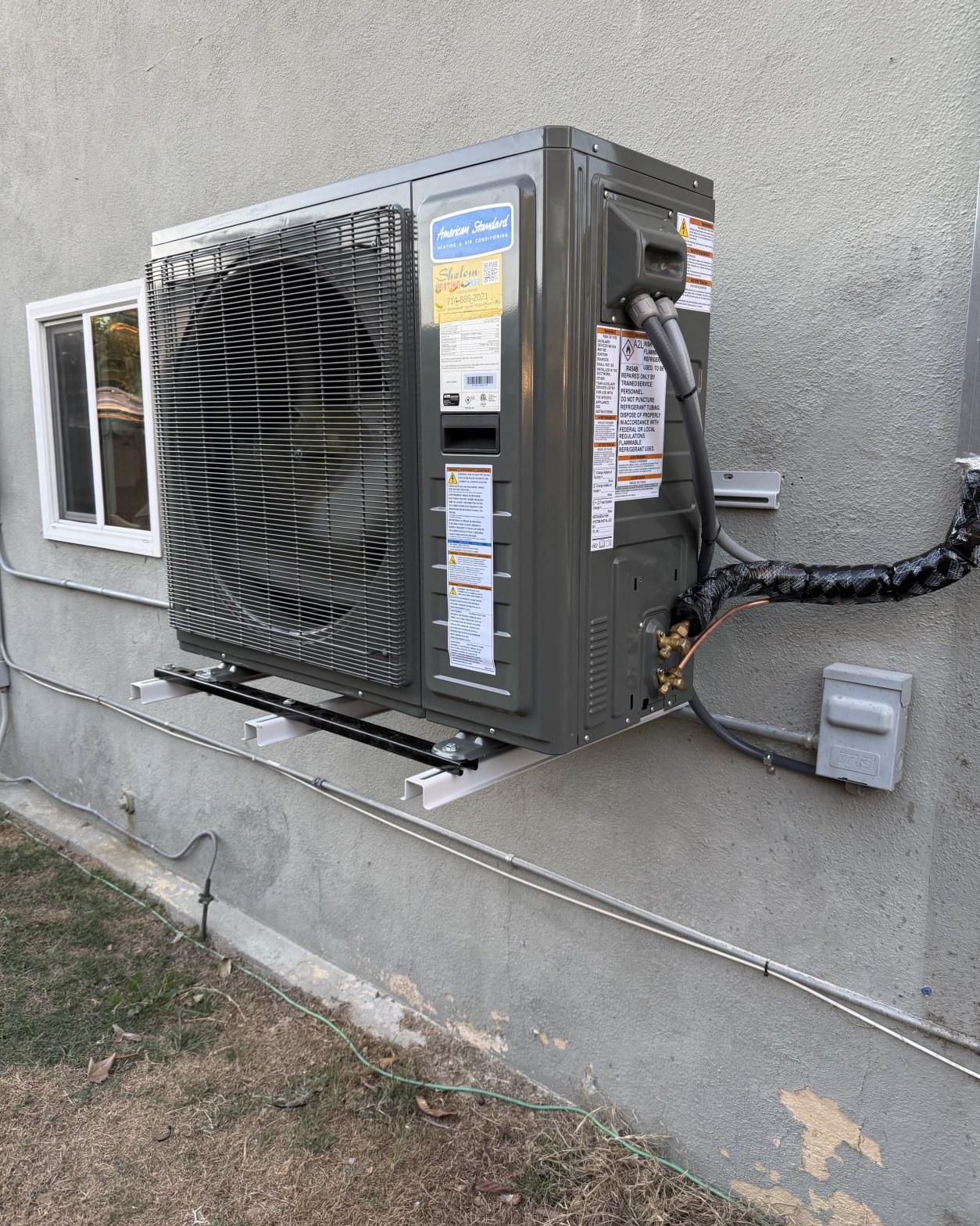
Commercial Rooftop HVAC Installation Project
Shalom Heating & Air completed a large-scale rooftop HVAC installation on a commercial building in Paramount, CA, placing and connecting more than 8 packaged rooftop units across a single flat-roof deck.
What Did This Project Involve?
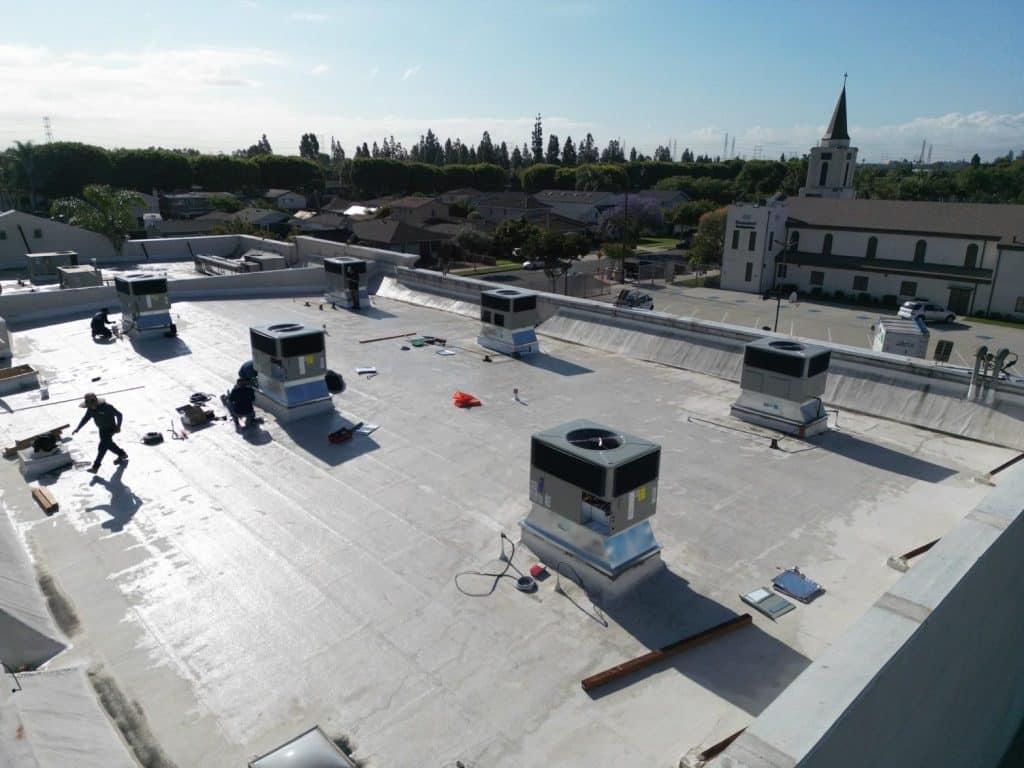
Shalom Heating & Air was contracted to replace and install more than 8 packaged rooftop HVAC units on a large commercial building in Southern California. The building — a multi-use facility situated next to a prominent church campus — featured two interconnected flat-roof decks, each requiring its own complement of equipment. The owner’s goal was simple: replace an aging, piecemeal system with a uniform fleet of new units before Southern California’s summer heat arrives in force.
With average summer highs in the Southern California area routinely reaching 88–95°F, an undersized or failing rooftop system isn’t a minor inconvenience — it’s a liability for any occupied commercial space. That urgency shaped the project timeline from day one.
How Many Units Were Installed, and How Were They Positioned?
Eight-plus packaged rooftop units were installed across the two roof levels, with each unit set on a dedicated factory curb to ensure a watertight seal with the TPO membrane below. Spacing was planned to distribute the load evenly and preserve walkway clearance between units — a requirement under California’s Title 24 building energy standards for commercial HVAC accessibility.
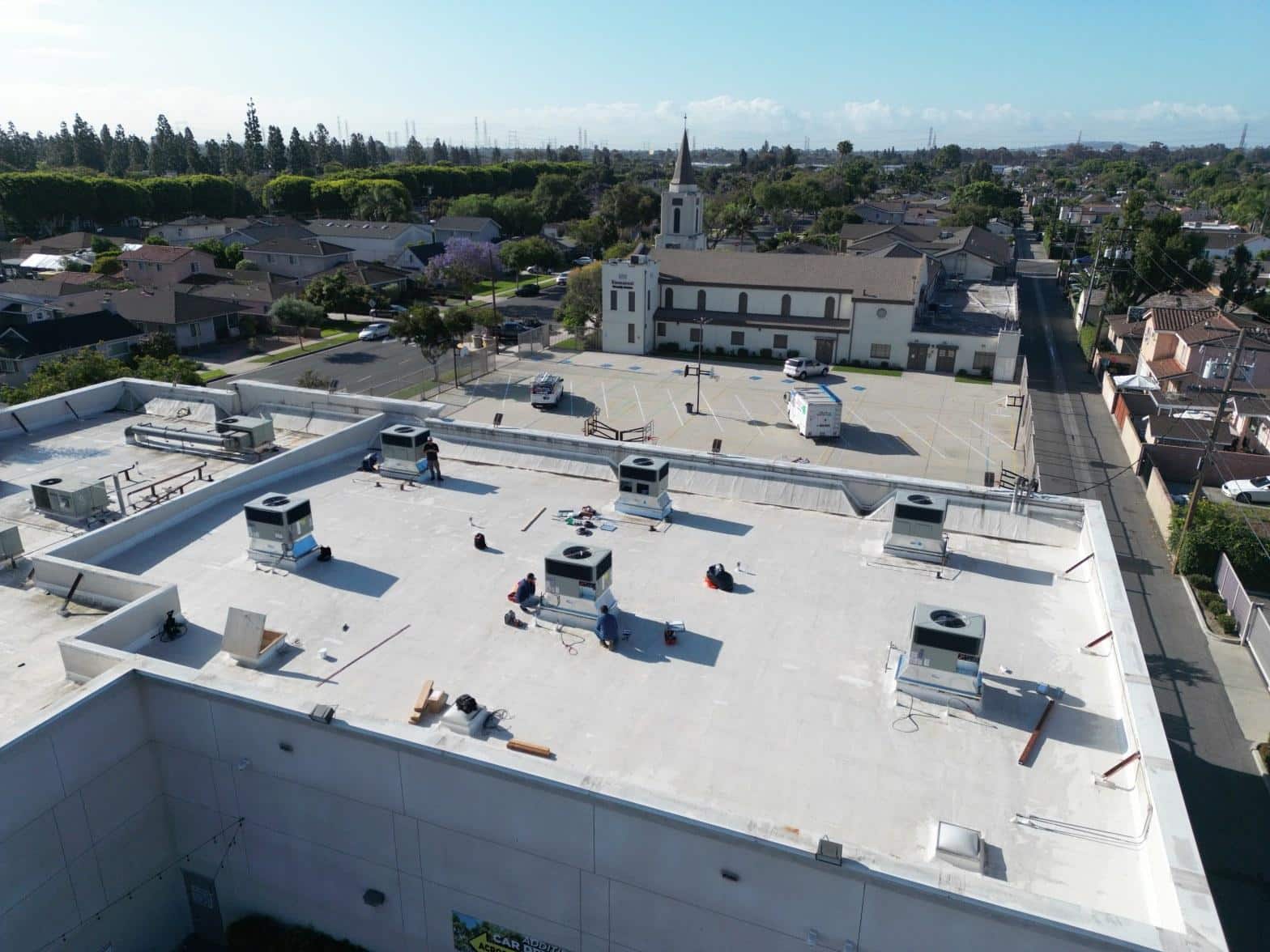
From the aerial shots, the layout is deliberate: units are staggered rather than lined up in a single row, which allows each unit’s condenser airflow to exhaust freely without short-circuiting into an adjacent intake. You can also see the fresh white TPO roof membrane — a surface that reflects radiant heat and reduces the thermal load each unit has to overcome on a sunny Southern California afternoon.
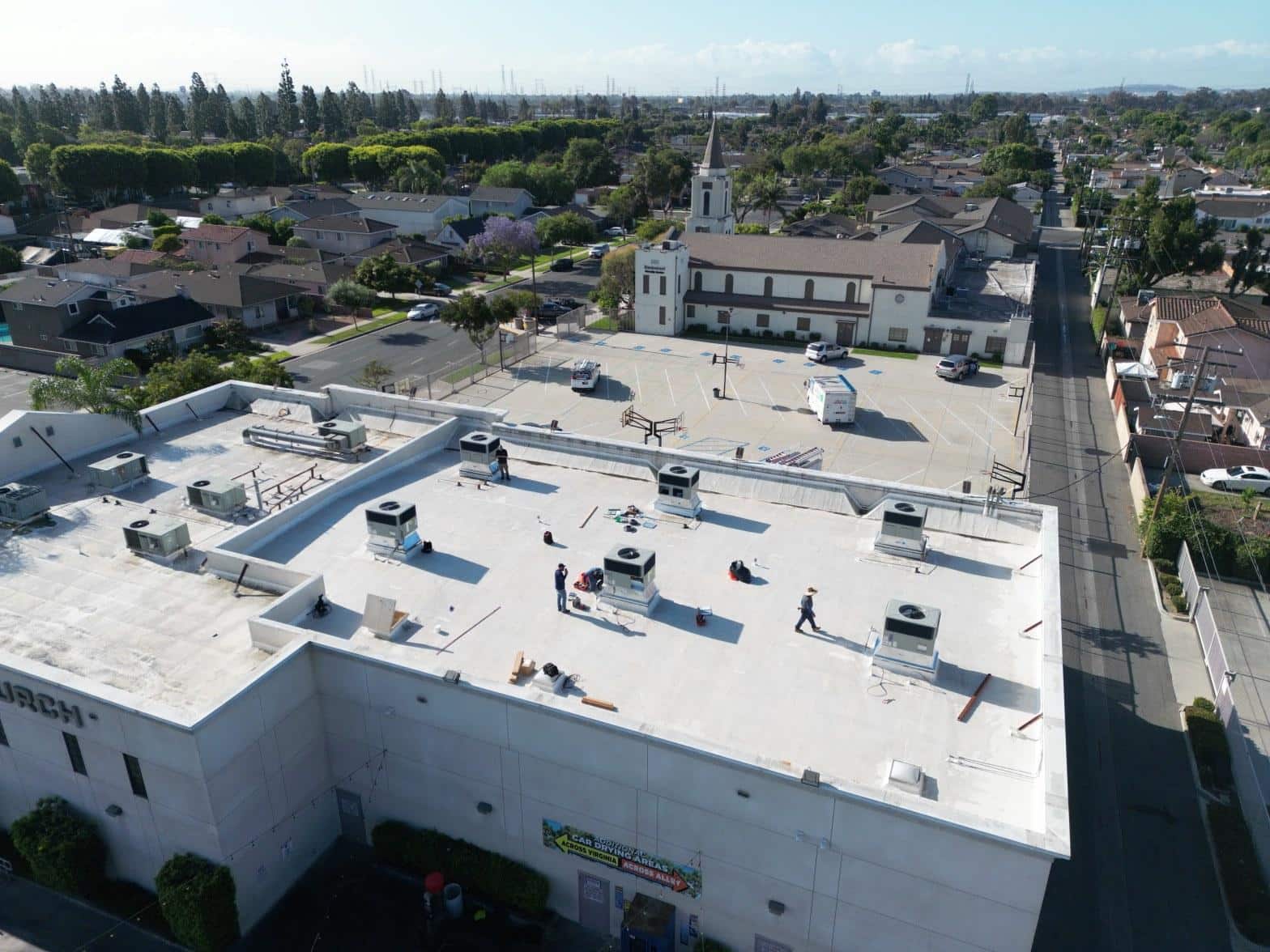
Our technicians set and leveled all 8-plus units in coordinated teams working simultaneously across both roof sections — a logistics challenge that required staging equipment on the ground and craning or lifting each unit into position without damaging the finished membrane. Across commercial projects of this scale in the LA Basin, we’ve found that running parallel crews on separate roof sections cuts total installation time by roughly 40% compared to a sequential single-crew approach.
What Does the Full Campus Context Tell Us About the Scope?
This wasn’t a simple swap-and-go job — the building footprint is large enough that the full installation is only visible from an elevated aerial perspective. The drone view of the campus shows the commercial building occupying a full city block adjacent to the church, with HVAC service vehicles staged in the parking lot below and crews spread across the entire roof simultaneously.
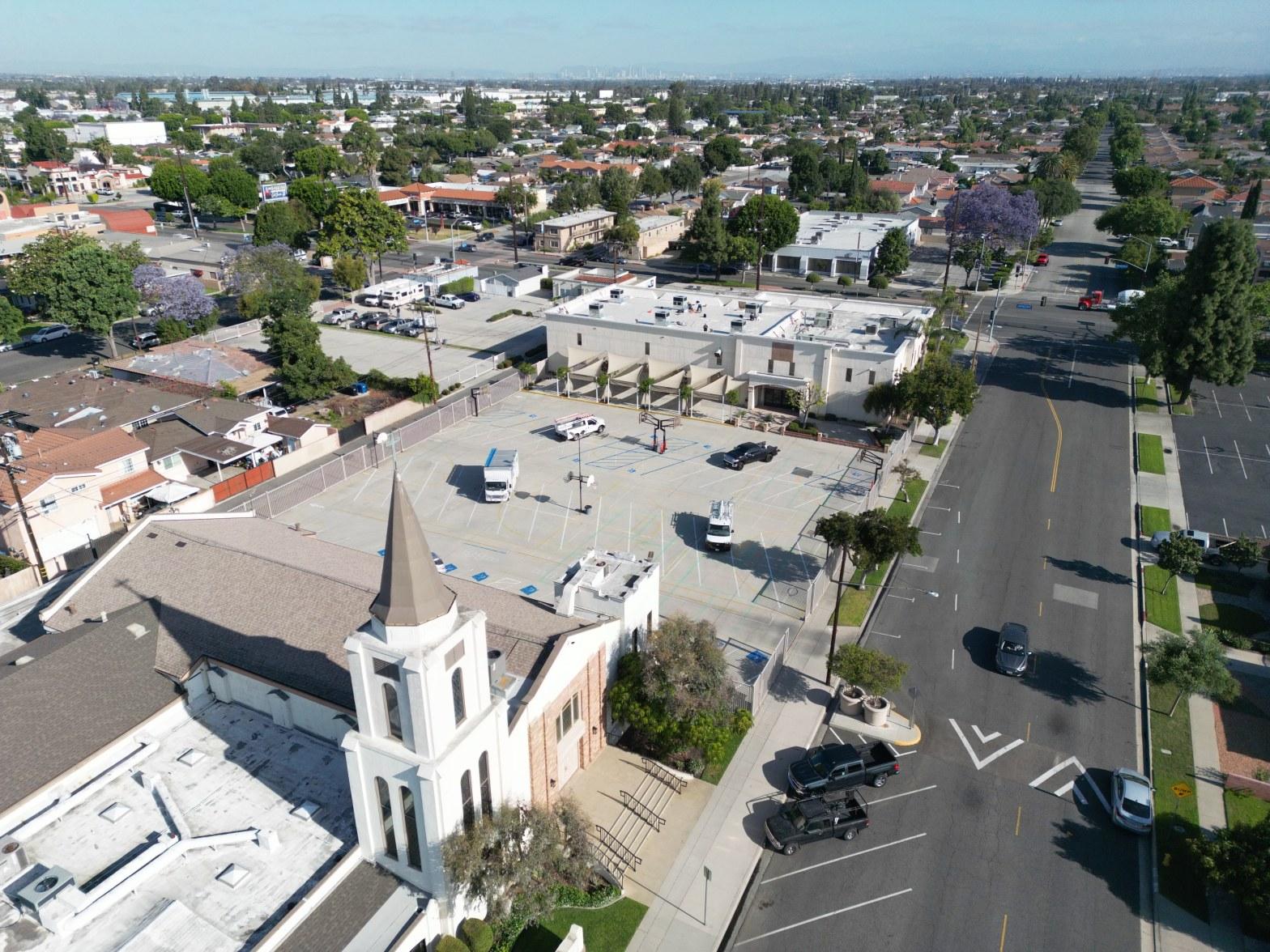
That scale meant careful coordination of material staging: lumber for temporary protection of the membrane, electrical supply reels, refrigerant lines, and hand tools all had to be on the roof before work began each morning. California’s OSHA heat illness prevention standard (Title 8, Section 3395) also governed our outdoor work plan — rest rotations and water stations were built into the daily schedule for the crew.
Commissioning and Final Condition
Every unit was leak-tested, charged to manufacturer specification, and verified for proper airflow before the crew left the roof. In the close-up shots, you can see the condenser fans already spinning on several units while others are mid-connection — a sign that the team commissioned each unit in sequence as the electrical and refrigerant hookups were completed, rather than waiting for all units to be fully piped before powering anything on. That approach catches wiring or refrigerant issues early, before the next unit goes live.
All refrigerant handling on this project followed EPA refrigerant regulations (Section 608) — required for any technician working with regulated refrigerants in California or anywhere in the US. Equipment of this class, installed after January 1, 2023, must also meet the updated ENERGY STAR efficiency minimums and California Energy Commission appliance standards for commercial packaged units.
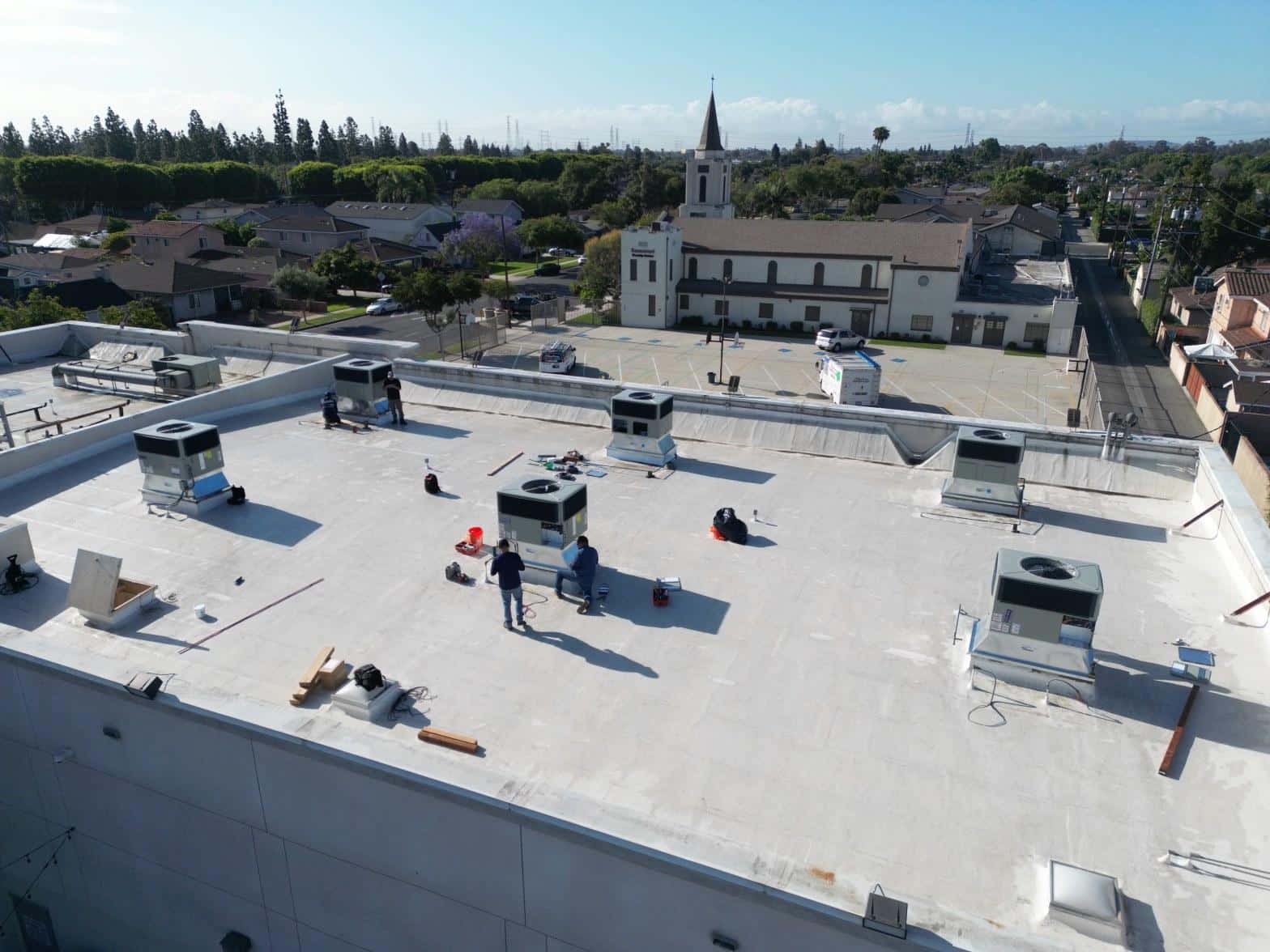
The finished roof tells the story clearly: 8-plus new units standing upright and level on a clean white membrane, with no visible gaps at the curbs, no exposed wiring, and all condenser guards in place. That’s the standard we hold every commercial installation to, regardless of unit count.
Get a Quote for Your Commercial Rooftop HVAC Project
If your commercial building is running aging rooftop equipment — or if you’re planning a full-system replacement like this one — schedule a site visit and written quote before the summer cooling season begins. Shalom Heating & Air is Licensed by the California Contractors State License Board (CSLB) and serves commercial clients throughout Southern California, Downey, Compton, Bellflower, and surrounding cities in Los Angeles County. Call us or submit your project details online to get started.
Explore our full range of HVAC services across Southern California.
Frequently Asked Questions
How long does it take to install multiple rooftop HVAC units on a commercial building?
A project involving 8 or more rooftop units on a large commercial building typically takes 2 to 4 days with a full multi-person crew working simultaneously across roof sections. The timeline depends on roof accessibility, curb preparation, and how many electrical circuits need to be run or upgraded. Running parallel crews on separate roof sections — as we did on this project — can cut total installation time by roughly 40% compared to a sequential approach.
What kind of roof surface do rooftop HVAC units get installed on?
Most commercial rooftop units are installed on flat or low-slope roofs finished with a TPO, EPDM, or modified bitumen membrane. Each unit sits on a factory roof curb that is flashed and sealed to the membrane to prevent water intrusion. On this project, the units were set on a white TPO membrane, which also helps reflect solar heat and reduce the cooling load on the equipment.
Do I need a permit to replace rooftop HVAC units on a commercial building in California?
Yes — commercial HVAC replacement in California requires a mechanical permit from the local building department in virtually all jurisdictions. The work must also comply with California's Title 24 building energy standards, which set minimum efficiency requirements for commercial packaged rooftop equipment. A licensed HVAC contractor will pull the permit and schedule any required inspections as part of the project.
How much does it cost to install a rooftop HVAC unit on a commercial building?
A single commercial packaged rooftop unit — equipment plus installation — typically runs $6,000 to $15,000 depending on tonnage, brand, and roof access conditions. A full multi-unit replacement of 8 or more units is a significant capital project, often in the $60,000–$120,000+ range before any available tax incentives. The Inflation Reduction Act federal tax credit provides deductions for qualifying commercial energy-efficiency upgrades, which can offset a portion of that cost.
How do I know when my commercial rooftop HVAC units need to be replaced instead of repaired?
Commercial rooftop units that are 15 years or older, require refrigerant recharges more than once per year, or are running R-22 refrigerant (which is no longer manufactured under EPA regulations) are strong candidates for full replacement rather than ongoing repair. Rising repair costs combined with declining efficiency — units lose roughly 5–10% of their rated output per decade without consistent maintenance — typically make replacement the more cost-effective choice beyond that age threshold.
Is it possible to install all the rooftop HVAC units for a large commercial building at the same time?
Yes, and it's often the preferred approach. Installing all units in a single mobilization avoids multiple crane or lift rentals, keeps the roof closed to outside contractors for a shorter total window, and ensures every unit is commissioned as a coordinated system rather than piecemeal. On this project, the full crew worked simultaneously across two interconnected roof decks to complete the installation in one continuous push.