
Furnace Repair in Los Angeles: What DTLA, Koreatown, and Silver Lake Residents Need to Know
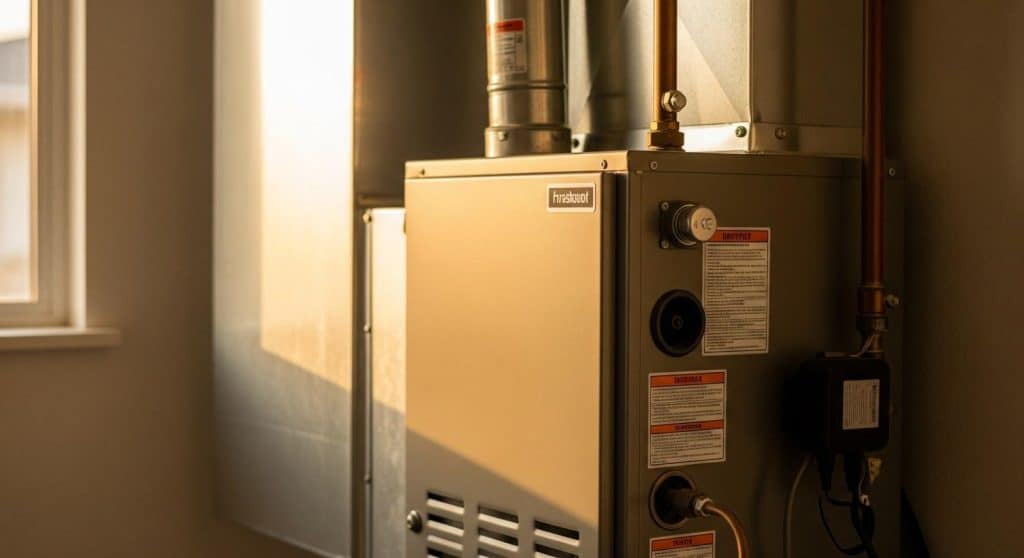
When Santa Ana winds push temperatures into the 30s overnight across the Los Angeles basin, a furnace that has sat idle for eight months is asked to work hard on short notice. That is exactly when furnace problems surface in neighborhoods like Silver Lake, Koreatown, and Downtown Los Angeles. If you are searching for furnace repair los angeles, this guide covers the specific failure patterns common to LA homes, what you can check yourself, and when to bring in a licensed technician.
For a broader look at keeping your heating system running year-round, see our guide to furnace repair in Los Angeles. This article goes deeper on the neighborhood-specific issues and the repair process itself.
Why Los Angeles Furnaces Break Down Differently Than in Colder Climates
A furnace in Los Angeles runs roughly 300 to 500 hours per year — compared to 1,500 or more hours in Chicago or Denver. That sounds like good news, but limited use creates its own problems. Components like igniters and heat exchangers (the metal chamber that separates combustion gases from your breathing air) degrade from thermal cycling, not just raw runtime. A furnace that fires up only 30 nights a year still stresses its parts every single time.
A furnace in Los Angeles runs roughly 300 to 500 hours per year, but limited use creates its own problems — igniters and heat exchangers degrade from thermal cycling, not just raw runtime.
The noaa.gov/” rel=”noopener”>National Oceanic and Atmospheric Administration records average January lows in the mid-40s Fahrenheit across central Los Angeles, with inland valleys regularly dipping below 40°F. That is cold enough to demand reliable heat, especially in older building stock common in ZIP codes like 90012 and 90013 in Downtown LA, where some residential units still run furnaces installed in the 1990s.
Santa Ana wind events, which typically arrive between October and December, also push fine particulate matter and dust through return vents. This clogs filters faster than residents expect and can starve the burner of airflow within a single heating season.
What Are the Warning Signs That Your Furnace Needs Repair in Los Angeles?
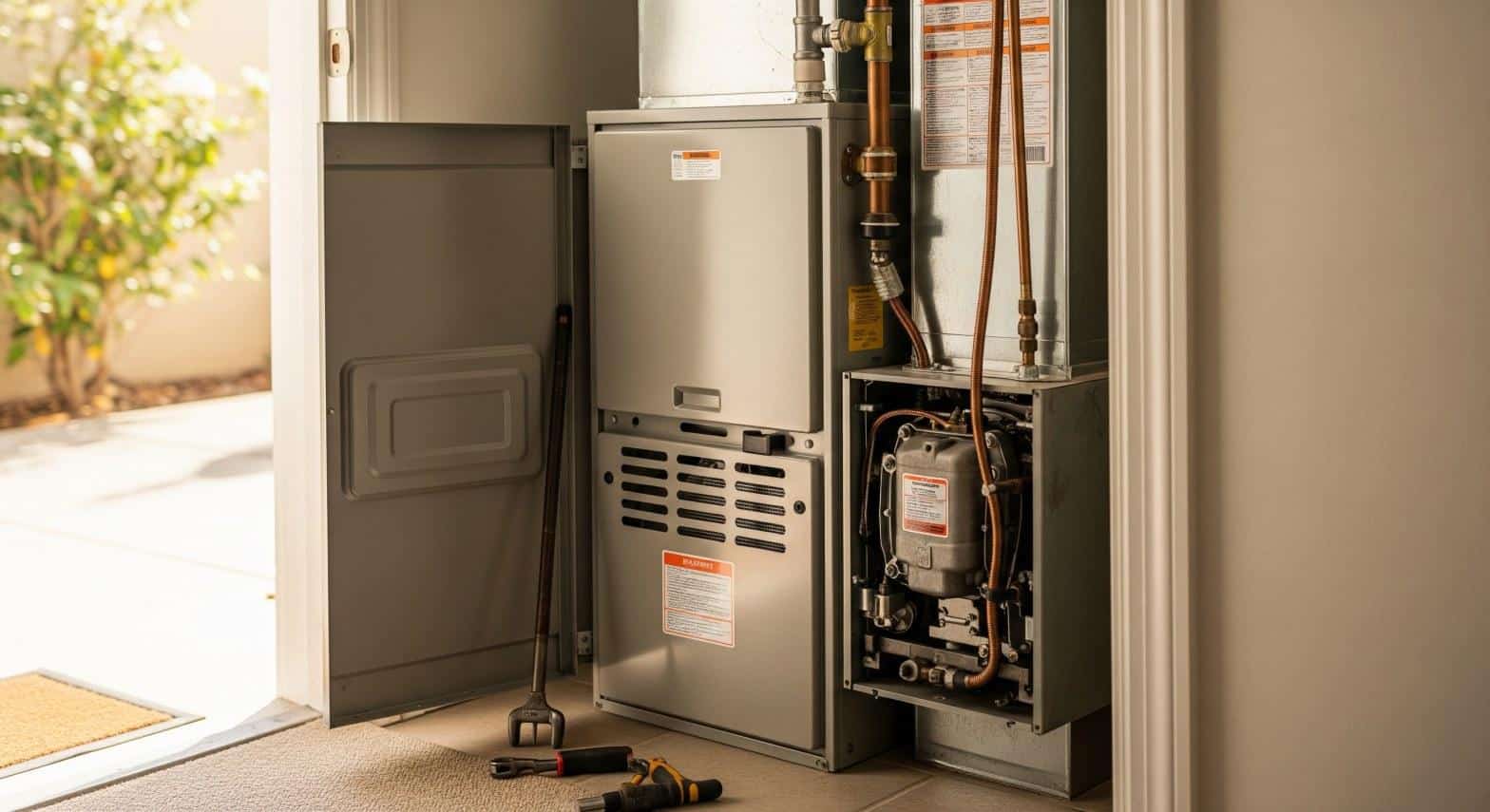
The most common warning signs are short cycling (the furnace turns on and off every few minutes), weak or uneven heat, and a yellow or orange burner flame instead of blue. Catching these early usually means a simpler, less expensive repair.
- Short cycling: The furnace fires up, runs for two to four minutes, then shuts off before the home reaches the set temperature. This often points to an overheating issue caused by a clogged filter or a failing limit switch.
- No ignition: The thermostat calls for heat but nothing happens. Hot surface igniters — the most common ignition type on furnaces made after 2000 — are fragile ceramic components that crack after repeated thermal stress. Brands like Carrier, Trane, and Lennox all use versions of this part.
- Weak airflow from vents: Reduced air volume usually means a dirty blower wheel, a failing blower motor, or a collapsed duct section.
- Yellow or flickering burner flame: A healthy gas flame is steady and blue. Yellow or orange flames suggest incomplete combustion, which can mean a dirty burner or, more seriously, a cracked heat exchanger. A cracked heat exchanger is a safety issue — it can allow carbon monoxide to enter living spaces.
- Unusual smells: A dusty smell on the first run of the season is normal. A persistent burning smell, sulfur odor, or metallic scent after the first few cycles warrants a professional check.
- Higher gas bills without more use: A furnace losing efficiency often runs longer to hit the thermostat target, burning more gas in the process.
Our technicians respond to roughly 3 times more emergency furnace calls in November and December than in any other two-month window — consistent with the pattern of furnaces sitting idle through spring and summer before being asked to perform when temperatures drop.
What Can a Los Angeles Homeowner Safely Check Before Calling a Pro?
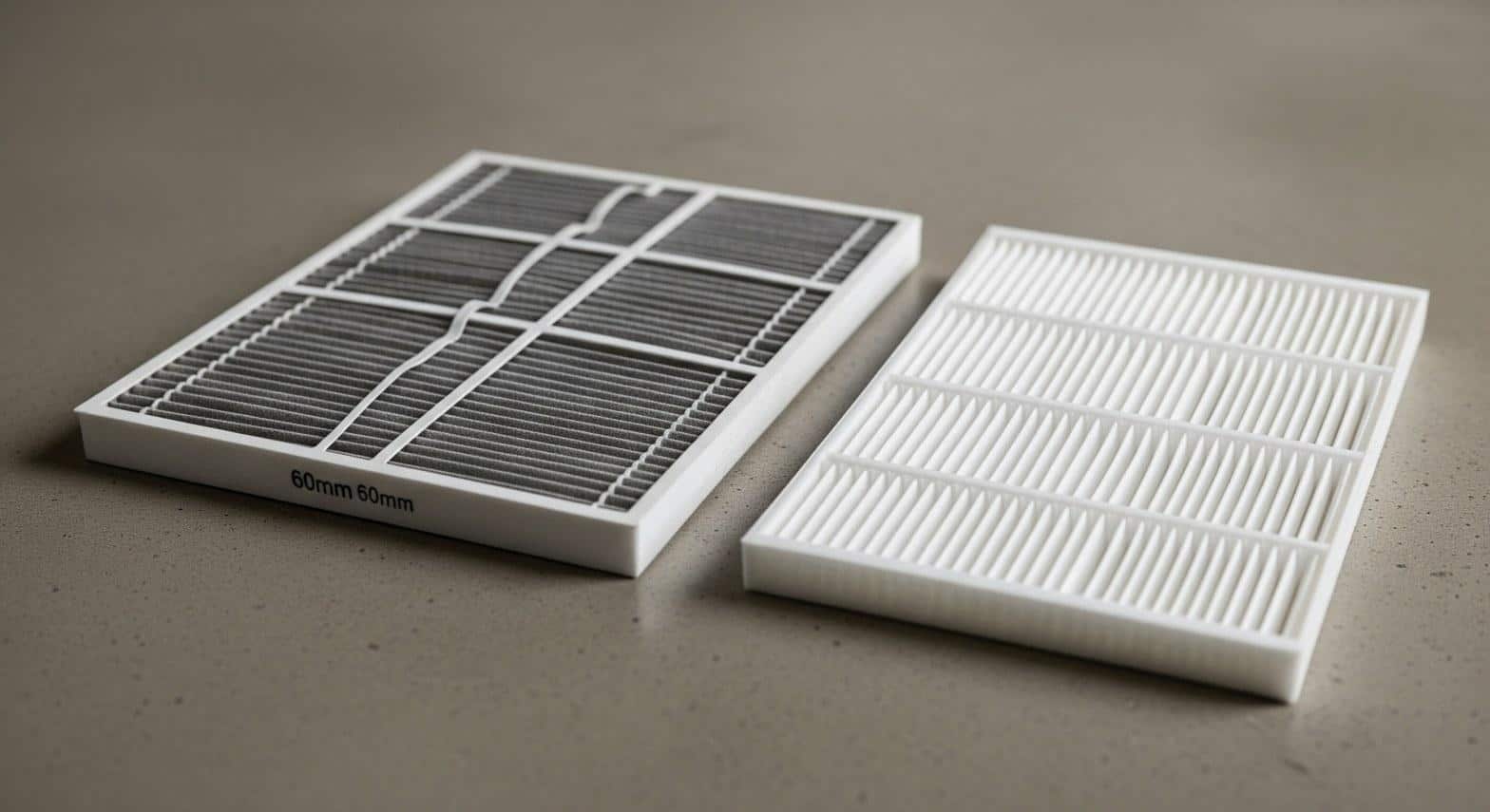
Before calling for service, homeowners can check four things that resolve a surprising number of no-heat calls: the air filter, the thermostat settings, the circuit breaker, and the furnace power switch. These checks take about 10 minutes and cost nothing.
- Check the air filter. A filter clogged with dust and debris is the single most common cause of furnace shutdowns in Los Angeles. Filters in homes near busy streets or in areas with frequent Santa Ana wind events should be replaced every 30 to 60 days during heating season. Pull the filter out — if you cannot see light through it, replace it before anything else.
- Check thermostat settings. Confirm the thermostat is set to HEAT (not COOL or FAN), and that the set temperature is at least 3 to 5 degrees above the current room temperature. If you have a smart thermostat like a Nest or Ecobee, check that it has not switched to an eco-hold or away schedule.
- Check the circuit breaker. Furnaces run on a dedicated 120V circuit. If the breaker has tripped, reset it once. If it trips again immediately, stop and call a technician — a recurring trip signals a wiring or motor problem.
- Check the furnace power switch. This looks like a standard light switch on the wall near the air handler. It is sometimes accidentally switched off during cleaning or storage retrieval. Confirm it is in the ON position.
- Check the condensate drain line (high-efficiency furnaces only). Furnaces rated at 90% AFUE (Annual Fuel Utilization Efficiency) or above produce condensate water. If the drain line clogs, a float switch shuts the unit down as a safety measure. Look for standing water near the unit.
Do not attempt to light a gas furnace pilot manually if the unit has electronic ignition. Modern furnaces installed under California’s Title 24 building energy standards use electronic ignition systems, not standing pilots. Attempting to bypass the ignition sequence can create a gas buildup hazard.
What Does Furnace Repair in Los Angeles Actually Cost?
In the Los Angeles regional market, furnace repair service calls typically range from $150 to $600 for common repairs, with more complex jobs like heat exchanger replacement or blower motor replacement running $400 to $1,200 or more depending on scope and parts. These are market ranges — not quotes — and actual costs depend on the specific failure, the equipment brand, and parts availability.
| Repair Type | Typical Market Range (LA) | Key Cost Factors |
|---|---|---|
| Igniter replacement | $150 – $350 | Part cost varies by brand (Carrier, Trane, Goodman); labor is usually under 1 hour |
| Blower motor replacement | $400 – $900 | Variable-speed motors cost more than single-speed; older Lennox and Trane units may require special-order parts |
| Heat exchanger replacement | $600 – $1,500+ | Labor-intensive; on units older than 15 years, full replacement is often more cost-effective |
| Control board replacement | $350 – $800 | OEM boards cost more than aftermarket; availability varies by model year |
| Capacitor or relay | $150 – $300 | Quick repair; parts are inexpensive but diagnosis time is billed |
| Gas valve replacement | $300 – $700 | Requires licensed technician; part cost is the main variable |
If your furnace is more than 15 to 20 years old and the repair estimate exceeds 50% of a new unit’s installed cost, replacement is often the smarter financial move. As of 2026, the Inflation Reduction Act federal tax credit offers up to 30% back (capped at $600) on qualifying high-efficiency furnace upgrades — which can meaningfully shift the repair-versus-replace math. Check current eligibility at ENERGY STAR’s federal tax credit page.
For a custom quote on your specific situation, contact Shalom Heating & Air directly rather than relying on these market ranges.
What Does a Pro Do on a Furnace Repair Service Call?
A licensed furnace technician typically completes a diagnostic and standard repair in one to three hours. The process follows a logical sequence from safety checks to component testing to the actual fix.
The technician starts with a visual inspection of the heat exchanger and burner assembly. Cracks in the heat exchanger are a safety priority because they can allow combustion gases — including carbon monoxide — to mix with circulated air. This check alone is worth the service call cost.
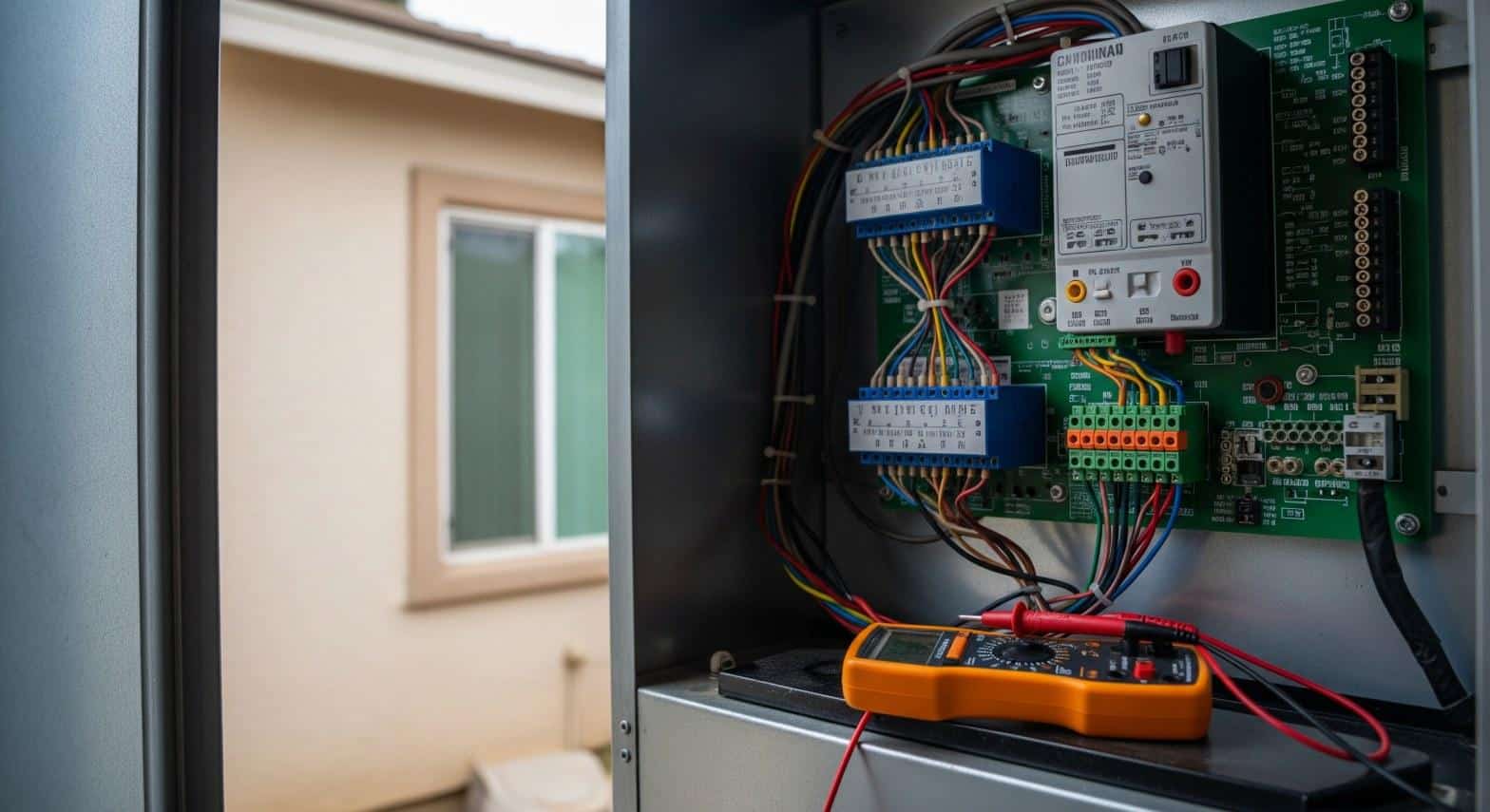
Next, the tech checks the ignition system. On Carrier, Trane, and Lennox units from the last 20 years, this means testing the hot surface igniter with a multimeter (a tool that measures electrical resistance). A healthy igniter reads between 40 and 200 ohms. A reading outside that range means replacement.
The blower motor and capacitor are tested under load. The technician also checks static pressure (the resistance the blower faces pushing air through your duct system) and compares it against the furnace manufacturer’s specification. High static pressure from undersized ducts or blocked returns is a common finding in older Koreatown and Silver Lake bungalows, where ductwork was retrofitted rather than designed from scratch.
In California, any work involving gas lines or refrigerant requires a contractor licensed by the California Contractors State License Board (CSLB). You can verify a contractor’s license status at cslb.ca.gov before any work begins. Permit requirements for furnace repair vary by scope — a straight component swap generally does not require a permit, but a full furnace replacement in Los Angeles typically does require a mechanical permit pulled through the city.
Across our service calls in Los Angeles, we find that roughly 40% of furnace repairs involve either a failed igniter or a clogged filter that caused a secondary component failure — both of which are preventable with annual maintenance before the heating season starts.
Related Articles
Frequently Asked Questions
How much does furnace repair usually cost in Los Angeles?
In the Los Angeles market, most furnace repairs range from $150 to $600 for common fixes like igniter or capacitor replacement. More involved repairs such as blower motor or heat exchanger work typically fall between $400 and $1,200 or more depending on the part and the furnace brand. The age of your unit and parts availability are the biggest factors that move the price. Contact Shalom Heating & Air at (714) 886-2021 for a specific quote on your system.
How do I know if my furnace needs repair or just a new filter?
Start by replacing the filter — a clogged filter causes short cycling and shutdown on many Los Angeles furnaces, and it takes about five minutes to check. If the furnace still fails to heat the home after a fresh filter and a thermostat reset, the problem is likely a failed igniter, a faulty limit switch, or a control board issue that needs a technician. A yellow or orange burner flame, a burning smell that does not clear, or carbon monoxide alarm activation are signs to shut the system off and call a pro immediately.
How long does a furnace repair take in Los Angeles?
Most furnace repairs in Los Angeles are completed in one to three hours. Simple fixes like igniter replacement or a capacitor swap are often done in under an hour. More complex repairs such as blower motor replacement or heat exchanger work can take three to five hours, especially if special-order parts are needed for older Carrier, Trane, or Lennox units.
How do I repair a furnace blower motor myself?
Replacing a blower motor involves working with 120V electrical connections and is not a safe DIY task for most homeowners. You can safely check whether the blower is the problem by confirming the motor hums but does not spin (a sign the capacitor has failed) versus complete silence (which points to the motor or control board). The actual replacement should be done by a technician licensed by the California Contractors State License Board (CSLB) to ensure safe wiring and proper motor sizing for your specific furnace model.
Why does my furnace keep turning on and off every few minutes in my Los Angeles home?
This pattern is called short cycling, and in Los Angeles homes it is most often caused by a clogged air filter restricting airflow, which causes the furnace to overheat and trip its safety limit switch. Other causes include an oversized furnace, a faulty flame sensor, or a cracked heat exchanger. Replace the filter first — if short cycling continues after that, call a licensed technician to diagnose the root cause before the repeated stress damages additional components.
