
AC Repair in Norwalk: Maintenance Tips to Prevent Costly Breakdowns
Why Does AC Maintenance Matter So Much in Norwalk, CA?
Norwalk‘s climate pushes air conditioners harder than most cities in the country. Summers regularly bring temperatures above 95°F, and fall Santa Ana wind events drive heat spikes that can last several days at a time. If you need ac repair norwalk residents know the worst time to discover a problem is when it is already 98°F outside and your system stops cooling.
The National Weather Service classifies the Norwalk area in a Mediterranean climate zone, meaning long, hot, dry summers with very little rain from June through September. Dust and particulate matter build up inside AC systems during these dry months, clogging filters and coils faster than in wetter climates.
Santa Ana winds, which typically arrive between October and December, carry fine dust and dry air that further stress condenser coils (the outdoor unit that releases heat from your home). Homes in the Studebaker and Norwalk Hills neighborhoods, where single-family housing stock often includes systems installed in the 1990s and early 2000s, are especially vulnerable to accelerated wear.
Routine maintenance is the most reliable way to avoid an emergency call. According to the U.S. Department of Energy, a well-maintained AC system uses up to 15% less energy than a neglected one of the same age and model.
A well-maintained AC system uses up to 15% less energy than a neglected one of the same age and model.
What Warning Signs Mean Your AC Needs Repair in Norwalk?
Most AC problems give you at least one warning before they cause a full breakdown. Catching these signs early is the difference between a minor repair and replacing a major component. Here are the red flags to watch for between professional service visits.
- Warm air from vents: If your system runs but blows air that is not cold, the refrigerant charge may be low or the compressor may be failing.
- Weak airflow: Vents push noticeably less air than usual, which often points to a clogged filter, blocked duct, or a failing blower motor.
- Short cycling: The system turns on and off every few minutes instead of running a full cooling cycle. This wastes energy and stresses the compressor.
- Grinding or squealing sounds: These noises usually mean a belt or bearing inside the air handler is worn and close to failure.
- Water pooling near the indoor unit: The condensate drain line (the pipe that removes moisture collected during cooling) is likely clogged, which can cause water damage if ignored.
- Unusually high electric bills: A spike of 20% or more on your summer electricity bill without a change in usage habits often means the system is working harder than it should.
- Ice on the refrigerant lines: Frost or ice on the copper lines running between your indoor and outdoor units signals restricted airflow or low refrigerant.
- Burning or musty smell: A burning odor suggests an electrical issue; a musty smell points to mold growth inside the air handler or ductwork.
Our technicians respond to roughly 3 times more emergency AC calls in July and August than in any other two-month window across Norwalk ZIP codes 90650 and 90651 — and in most of those cases, the homeowner had noticed at least one of the signs above weeks earlier.
| Symptom | Likely Cause | DIY or Pro? |
|---|---|---|
| Warm air from vents | Low refrigerant or compressor issue | Pro — refrigerant work requires EPA 608 certification |
| Weak airflow | Clogged filter or blower motor | DIY for filter; Pro for motor |
| Short cycling | Oversized system, low refrigerant, or bad capacitor | Pro |
| Grinding or squealing | Worn belt or bearing | Pro |
| Water pooling indoors | Clogged condensate drain | DIY flush possible; Pro if recurring |
| Ice on refrigerant lines | Low refrigerant or restricted airflow | Pro |
| Burning smell | Electrical fault | Pro — shut system off immediately |
| Musty smell | Mold in air handler or ducts | Pro |
What Can Homeowners Safely Do Themselves Each Season?
Several maintenance tasks require no special tools and take less than 30 minutes. Doing these consistently through the year reduces the chance of a breakdown by keeping the system clean and unrestricted. Here is what to do each season in Norwalk’s climate.
Spring (March through May)
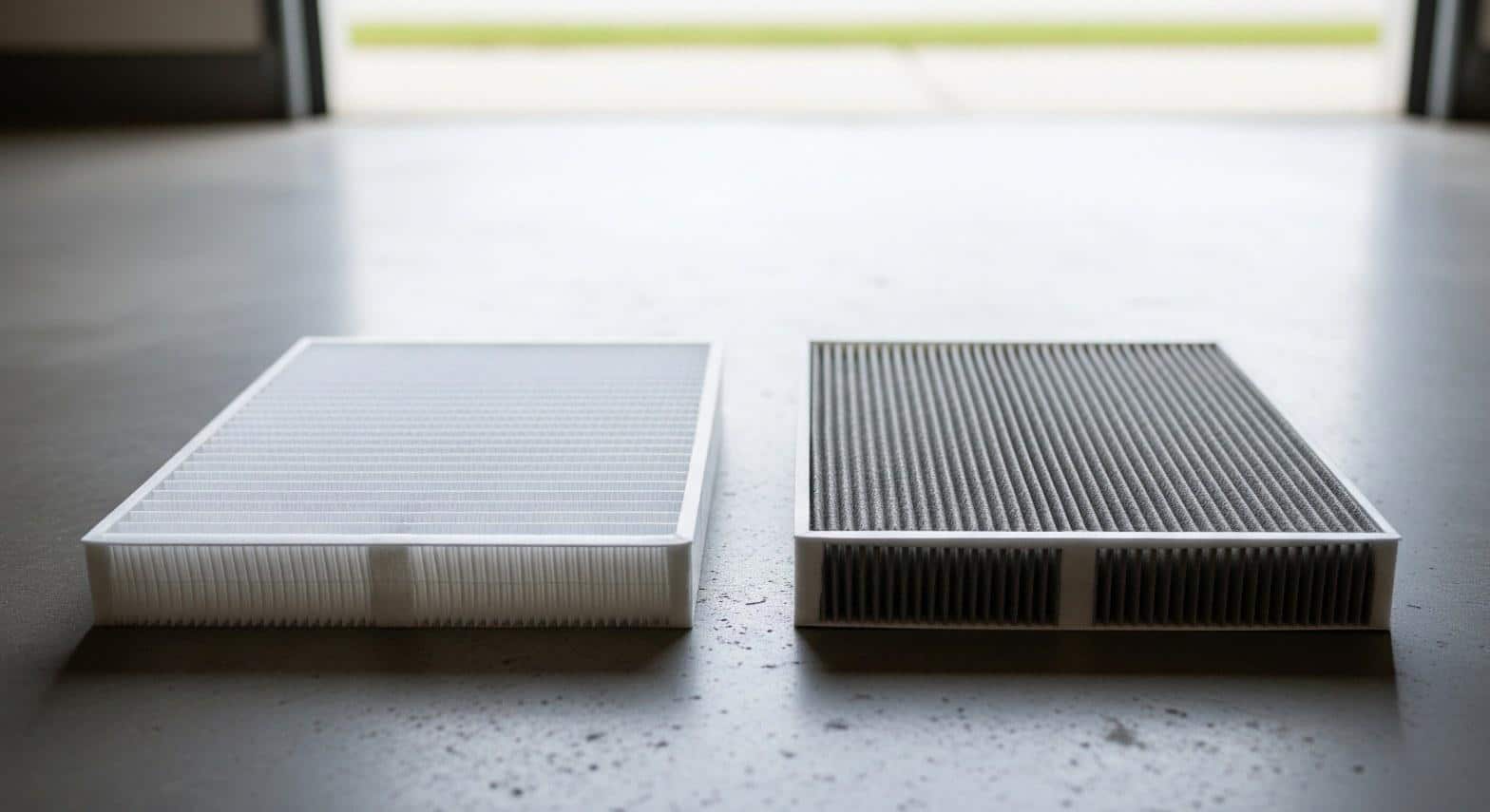
- Replace or clean the air filter. In Norwalk’s dusty climate, a 1-inch filter should be swapped every 30 to 60 days during heavy use seasons.
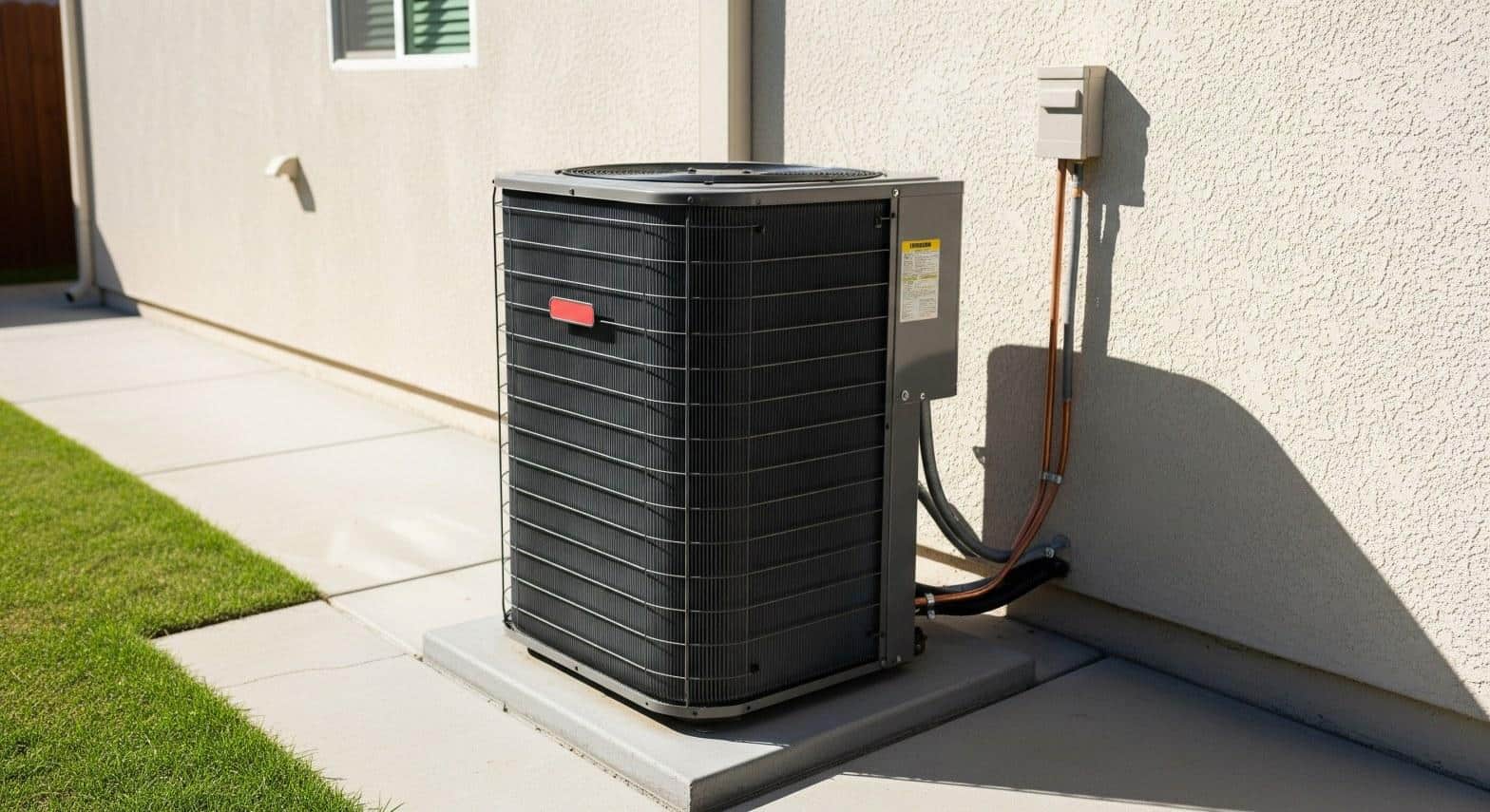
- Clear debris from around the outdoor condenser unit. Leave at least 2 feet of clearance on all sides.
- Straighten any bent fins on the condenser coil using a fin comb (available at hardware stores for under $15).
- Test your thermostat by setting it 5°F below the current room temperature and confirming the system starts within 2 minutes.
- Schedule a professional tune-up before June so any issues are fixed before peak demand.
Summer (June through September)
- Check and replace the filter every 30 days — dust and pollen levels peak during Norwalk’s dry summer months.
- Keep blinds and curtains closed on south- and west-facing windows during afternoon hours to reduce the cooling load on your system.
- Pour a cup of diluted bleach (1 part bleach, 10 parts water) down the condensate drain access port monthly to prevent algae clogs.
- Listen for any new sounds when the system starts up. Catching a rattling or clicking noise early can prevent a compressor failure.
Fall (October through December)
- After Santa Ana wind events, inspect the outdoor unit for dust buildup and debris carried by the winds.
- Rinse the condenser coil gently with a garden hose — spray from the inside out to push debris away from the coil, not deeper into it.
- Check that the area around the outdoor unit has not been overgrown by plants or shrubs during the summer.
Winter (January through February)
- Replace the filter even during low-use months to maintain indoor air quality and protect the blower motor.
- If you have a heat pump (a single unit that handles both heating and cooling), schedule a heating-mode check to confirm the reversing valve is working properly.
What Does a Professional AC Tune-Up Include in Norwalk?
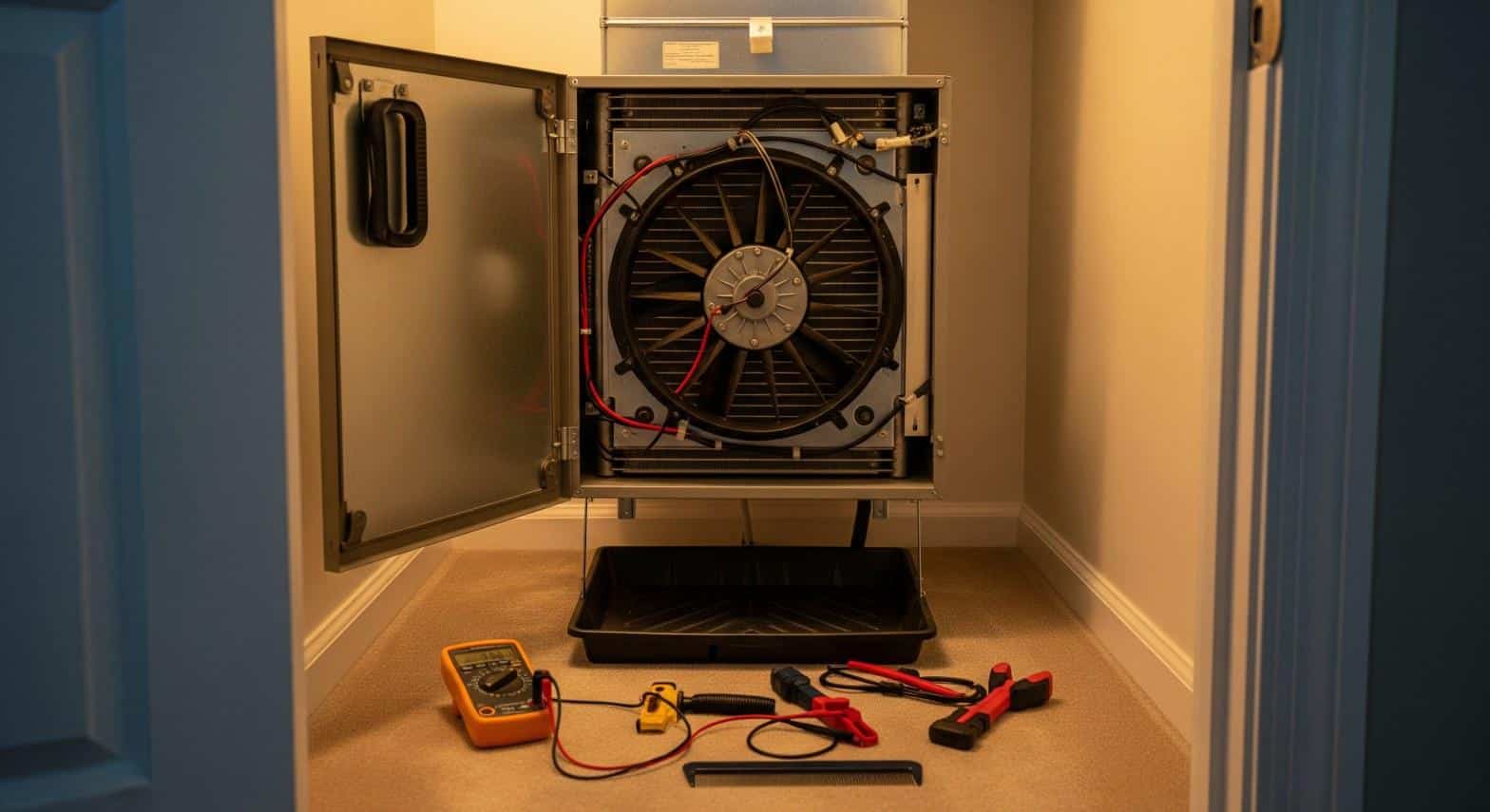
A standard professional AC tune-up in Norwalk takes 60 to 90 minutes and covers 15 to 20 inspection and cleaning points. The technician checks components that homeowners cannot safely access, including electrical connections, refrigerant levels, and internal coil surfaces. Here is what a thorough visit covers.
- Refrigerant level check: Low refrigerant (also called Freon or R-410A on most current systems) forces the compressor to overwork. Handling refrigerant requires a technician certified under EPA refrigerant regulations (Section 608).
- Electrical connection inspection: Loose connections cause overheating and can create fire hazards. The tech tightens terminals and checks voltage and amperage draws against manufacturer specs.
- Capacitor test: Capacitors (small cylindrical components that give the motors a startup boost) are among the most common failure points in Norwalk’s hot summers. Our technicians replace 40 to 60 capacitors across Norwalk each summer, nearly all on units older than 10 years.
- Evaporator and condenser coil cleaning: Dirty coils reduce heat transfer efficiency significantly. The tech uses a coil cleaner spray and rinse to restore performance.
- Blower motor and belt inspection: The tech measures motor amperage and checks for belt wear or misalignment.
- Thermostat calibration: Confirms the thermostat reads the correct temperature and communicates properly with the air handler.
- Condensate drain flush: Clears algae and debris from the drain line to prevent water damage.
- Airflow measurement: Checks that supply and return airflow match the system’s design specifications, which should be sized using a Manual J load calculation.
Common brands in Norwalk homes include Carrier, Trane, Lennox, Goodman, and Rheem. Ductless mini-split systems from Mitsubishi and Daikin are increasingly common in additions and older homes without existing ductwork. A qualified technician should be familiar with the service procedures for all of these brands.
In California, any work involving refrigerant, electrical panels, or new equipment installation must be performed by a contractor Licensed by the California Contractors State License Board (CSLB). California’s Title 24 building energy standards also govern replacement equipment efficiency minimums, so if your system is being replaced rather than repaired, confirm the new unit meets current SEER2 ratings.
For more information about full AC system services in the area, visit Shalom Heating & Air’s Norwalk service page as the main hub for all repair and installation options.
How Much Does AC Repair in Norwalk Typically Cost?
AC repair costs in Norwalk vary widely based on which component has failed and how long the system has been neglected. In the Southern California regional market, minor repairs typically range from $150 to $500, while major component replacements can run $800 to $2,500 or more depending on scope.
The factors that move the price include the age of the unit, the brand and availability of parts, whether refrigerant needs to be added or the system has a leak, and whether the repair is done on a standard weekday or as an emergency call. As of 2026, R-410A refrigerant prices have risen due to phase-down regulations, which adds to the cost of refrigerant-related repairs compared to prior years.
If your system is more than 15 years old and needs a repair costing more than half the price of a new unit, replacement is often the better investment. New ENERGY STAR-rated systems with high SEER2 ratings qualify for the Inflation Reduction Act federal tax credit of up to $600 for qualifying central AC units, which can offset a portion of the replacement cost.
If your system is more than 15 years old and needs a repair costing more than half the price of a new unit, replacement is often the better investment.
The table below breaks down the most common repair categories and typical market ranges in this region.
| Repair Type | Typical Market Range (Southern CA) | Key Cost Factors |
|---|---|---|
| Capacitor replacement | $150 – $350 | Single vs. dual-run capacitor, brand |
| Refrigerant recharge | $250 – $600 | Amount needed, leak detection included or not |
| Refrigerant leak repair | $400 – $1,500 | Location of leak, coil vs. line set vs. valve |
| Blower motor replacement | $400 – $900 | Motor type, access difficulty, brand |
| Compressor replacement | $1,200 – $2,500+ | System tonnage, brand, age of unit |
| Condensate drain repair | $100 – $300 | Severity of clog, water damage present |
| Annual tune-up (preventive) | $80 – $200 | System type, number of units |
These are regional market ranges only, not quotes from Shalom Heating & Air. Actual costs depend on your specific system and situation. Request a custom quote before any work begins.
Schedule Your AC Maintenance in Norwalk Before Summer Hits
Spring is the best time to book an AC tune-up in Norwalk. Appointment slots fill quickly in May and June as homeowners across ZIP codes 90650, 90651, and 90652 prepare for summer heat. Waiting until July means longer wait times and a higher chance of running your system through its first hot days without a professional check.
Shalom Heating & Air serves Norwalk and the surrounding communities with ac repair norwalk homeowners can count on before and during peak season. Whether you need a full tune-up, a specific component repaired, or an honest assessment of whether your aging system is worth fixing, call (714) 886-2021 to schedule your appointment. Same-day service is available across all Norwalk ZIP codes for urgent issues.
Related Articles
Frequently Asked Questions
How much does it usually cost to repair an AC unit in Norwalk?
In the Southern California regional market, AC repairs typically range from $150 for a simple capacitor swap to $2,500 or more for a compressor replacement. The final cost depends on which component failed, the age and brand of your system, and whether refrigerant work is involved. The best way to get an accurate number for your specific system is to call Shalom Heating & Air at (714) 886-2021 for a custom quote before any work begins.
How do I know if my AC compressor is going bad?
A failing compressor usually shows up as warm air coming from the vents even though the system is running, short cycling where the unit turns on and off every few minutes, or a hard clicking or clanking noise from the outdoor unit at startup. If you notice any of these signs in your Norwalk home, shut the system off and call a licensed technician. Running a failing compressor can cause additional damage that raises the repair cost significantly.
Can I fix an AC refrigerant leak myself?
No — handling refrigerant requires certification under EPA refrigerant regulations (Section 608), and it is illegal for unlicensed individuals to purchase or add refrigerant to a system in California. A licensed technician will locate the leak, repair it, and recharge the system to the manufacturer's specified level. Skipping the leak repair and just adding refrigerant is a temporary fix that will not solve the underlying problem.
How often should I have my AC serviced in Norwalk?
Once a year is the standard recommendation, and spring is the best time to schedule it in Norwalk before summer temperatures climb above 90°F. Homeowners with older systems — 10 years or more — or those who run their AC heavily through the hot months may benefit from a mid-season check as well. Between professional visits, replacing your filter every 30 to 60 days is the single highest-impact DIY task you can do.
Why is my AC running but not cooling my house in Norwalk?
The most common reasons are low refrigerant due to a leak, a dirty evaporator or condenser coil blocking heat transfer, or a failing compressor. A clogged air filter can also restrict airflow enough to prevent proper cooling. Start by checking and replacing your filter — if that does not help within an hour of the system running, the problem likely requires a professional diagnosis. Shalom Heating & Air handles ac repair in Norwalk and can usually diagnose the issue in a single visit.
