AC Repair in Norwalk: How to Troubleshoot Before You Call a Tech
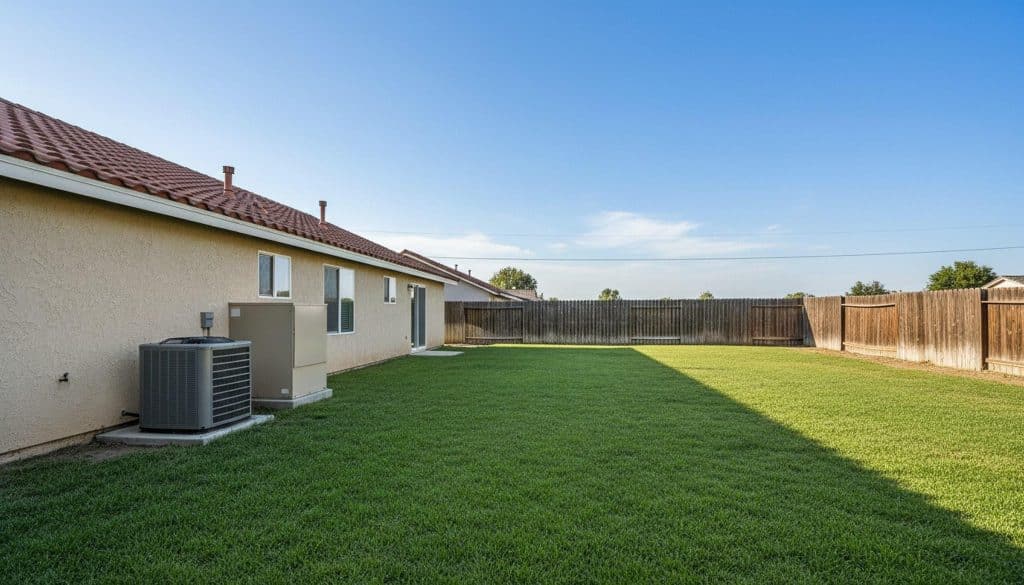
Before you book an AC repair in Norwalk, run through these quick troubleshooting steps. Many common problems have simple fixes — and knowing the difference can save you time and money.
Why Do AC Systems Fail in Norwalk, CA?
Norwalk‘s climate puts unusual stress on air conditioning systems, especially in late spring and summer when temperatures regularly climb past 95°F and Santa Ana wind events push hot, dry air through the region. The marine layer that settles over the Los Angeles Basin each morning adds moisture to outdoor coils, then afternoon heat bakes that moisture off — a cycle that accelerates corrosion on condenser coils and electrical contacts.
Norwalk sits in a Mediterranean Köppen climate zone, which means the AC system may sit idle for six or seven months, then face a sudden demand surge in June. Systems that were not serviced over winter are the ones most likely to fail on the first hot day of the year. If you are already searching for ac repair norwalk this spring, you are ahead of most neighbors.
The housing stock in neighborhoods like Studebaker and Norwalk Hills includes a large share of homes built between 1960 and 1990. Many of those homes still run Carrier, Trane, or Goodman central split systems (a setup where one indoor air handler connects to one outdoor condenser) that are 15 to 25 years old. Aging capacitors, dirty evaporator coils, and low refrigerant are the top three failure points we see on these older units every season.
What Are the Warning Signs Your AC Needs Attention in Norwalk?
Most AC problems announce themselves before the system fails completely. Catching these signs early usually means a smaller repair bill and a faster fix. Here are the most common symptoms Norwalk homeowners report:
- Warm or lukewarm air from vents: The system runs but never cools the room below 78°F even after 20 minutes. This often points to low refrigerant or a failing compressor.
- Weak airflow: Vents push noticeably less air than usual. A clogged filter or a failing blower motor are the most common causes.
- Short cycling: The unit turns on and off every 2 to 3 minutes instead of running a full 10 to 15 minute cycle. This can signal an oversized unit, a dirty coil, or a refrigerant issue.
- Ice on the indoor unit or refrigerant lines: Frost on the copper lines or on the air handler means airflow is restricted or refrigerant is low — both require attention before the compressor is damaged.
- Grinding, squealing, or banging sounds: Grinding usually means a motor bearing is failing. Squealing points to a worn belt on older units. Banging can mean a loose part inside the compressor.
- Tripped circuit breaker: If the AC breaker trips once and resets fine, it may be a one-time surge. If it trips again within a day, the system is drawing too much current — a sign of a failing capacitor or compressor.
- Musty or burning smell from vents: Musty odors suggest mold growth in the drain pan or evaporator coil. A burning smell means an electrical component is overheating and needs immediate inspection.
- Higher-than-normal electric bills: A sudden spike in your SCE bill in June or July without a change in usage habits often means the system is working harder than it should to reach the set temperature.
| Symptom | Likely Cause | DIY or Pro? |
|---|---|---|
| Warm air from vents | Low refrigerant, dirty coil, or failed compressor | Pro — refrigerant handling requires EPA Section 608 certification |
| Weak airflow | Clogged air filter or failing blower motor | DIY for filter; Pro for blower motor |
| Short cycling every 2-3 min | Dirty coil, oversized unit, or refrigerant issue | DIY coil rinse; Pro for refrigerant and sizing |
| Ice on lines or air handler | Restricted airflow or low refrigerant | DIY filter check first; then Pro |
| Grinding or banging noise | Worn motor bearing or loose compressor part | Pro — shut system off immediately |
| Repeated tripped breaker | Failing capacitor or compressor drawing excess current | Pro — electrical risk |
| Musty smell from vents | Mold in drain pan or on evaporator coil | DIY drain pan tablet; Pro for coil cleaning |
| Burning smell from vents | Overheating electrical component | Pro — shut system off immediately |
What Can You Safely Check Yourself Before Calling for AC Repair in Norwalk?
Several of the most common AC problems in Norwalk homes have simple DIY fixes that take 5 to 15 minutes and cost nothing. Work through these steps in order before scheduling a service call.
Step 1: Check the Thermostat
Confirm the thermostat is set to COOL, not FAN or HEAT, and that the target temperature is at least 3 to 4 degrees below the current room temperature. If you have a programmable or smart thermostat, check that it has not switched to a schedule that turns cooling off during the day. Replace the thermostat batteries if the display is dim or unresponsive — a dead battery is behind more no-cool calls than most homeowners expect.
Step 2: Replace or Check the Air Filter
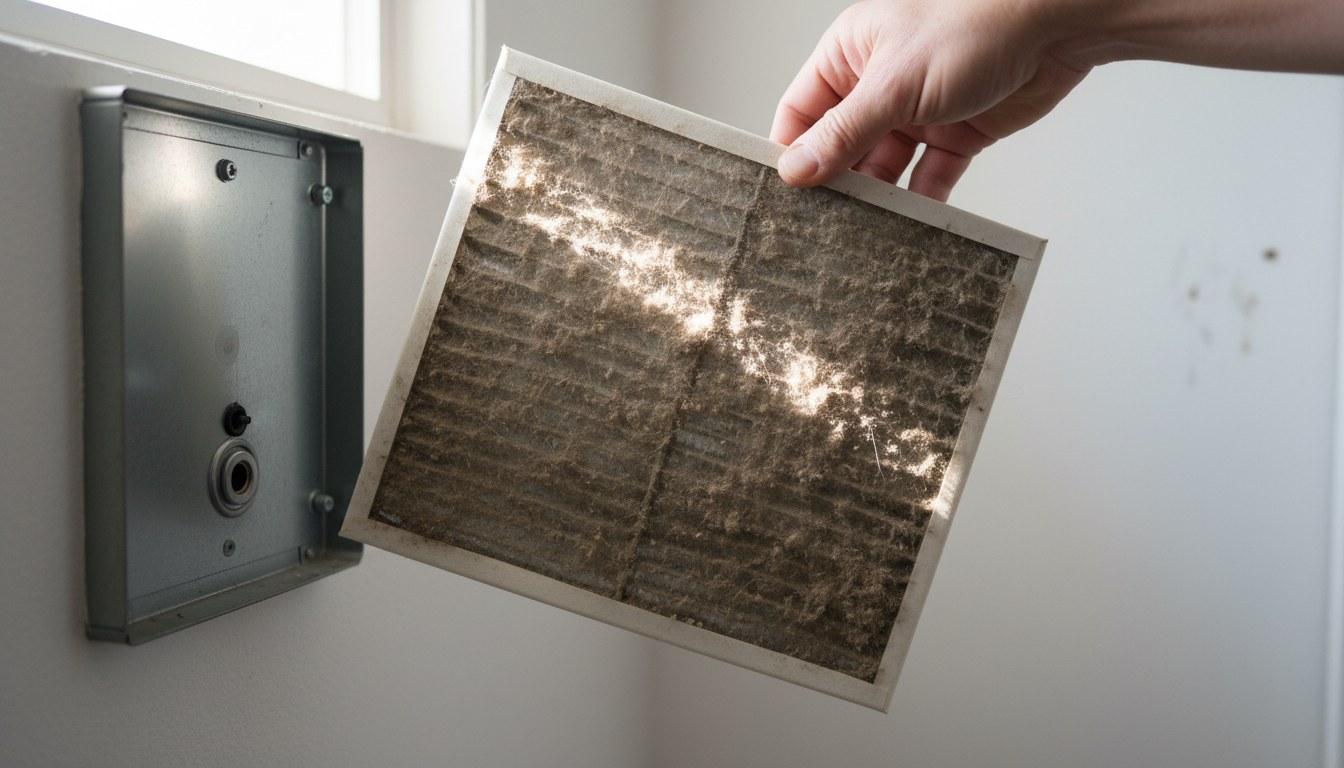
A clogged filter is the single most common cause of weak airflow and ice buildup. ENERGY STAR guidelines recommend checking filters every 30 days and replacing them every 60 to 90 days in typical use. In Norwalk’s dusty summer months — especially during Santa Ana wind events — a 1-inch filter can clog in as little as 3 to 4 weeks. Hold the filter up to a window: if you cannot see light through it, replace it before doing anything else.
Step 3: Reset the Circuit Breaker
Go to your electrical panel and look for the AC breaker. If it is in the middle or OFF position, flip it fully to OFF, wait 30 seconds, then flip it back to ON. Give the system 3 to 5 minutes before testing. If it trips again within the same day, stop resetting it and call a pro — repeated trips mean the system has an underlying electrical fault.
Step 4: Check the Outdoor Condenser Unit
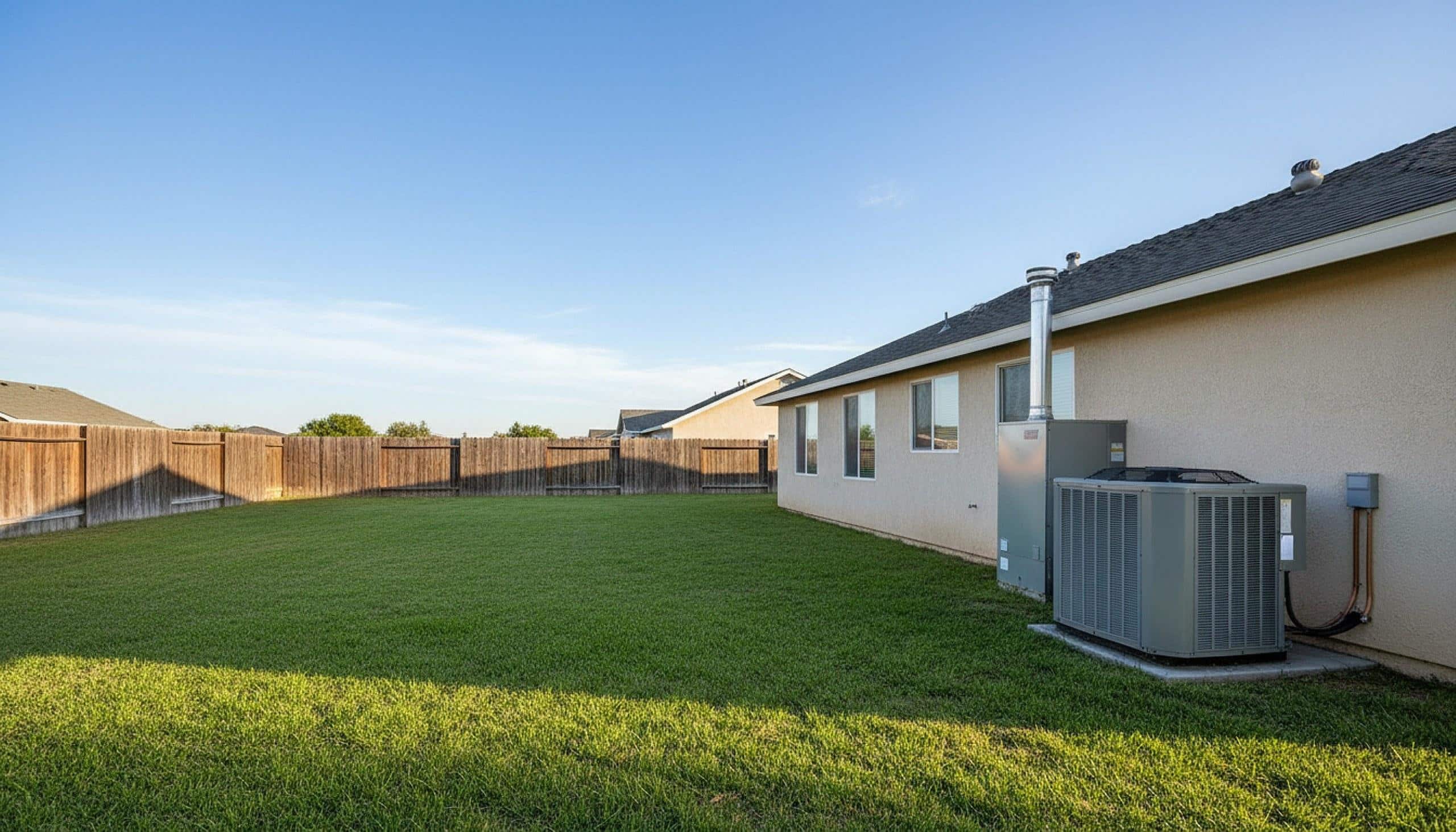
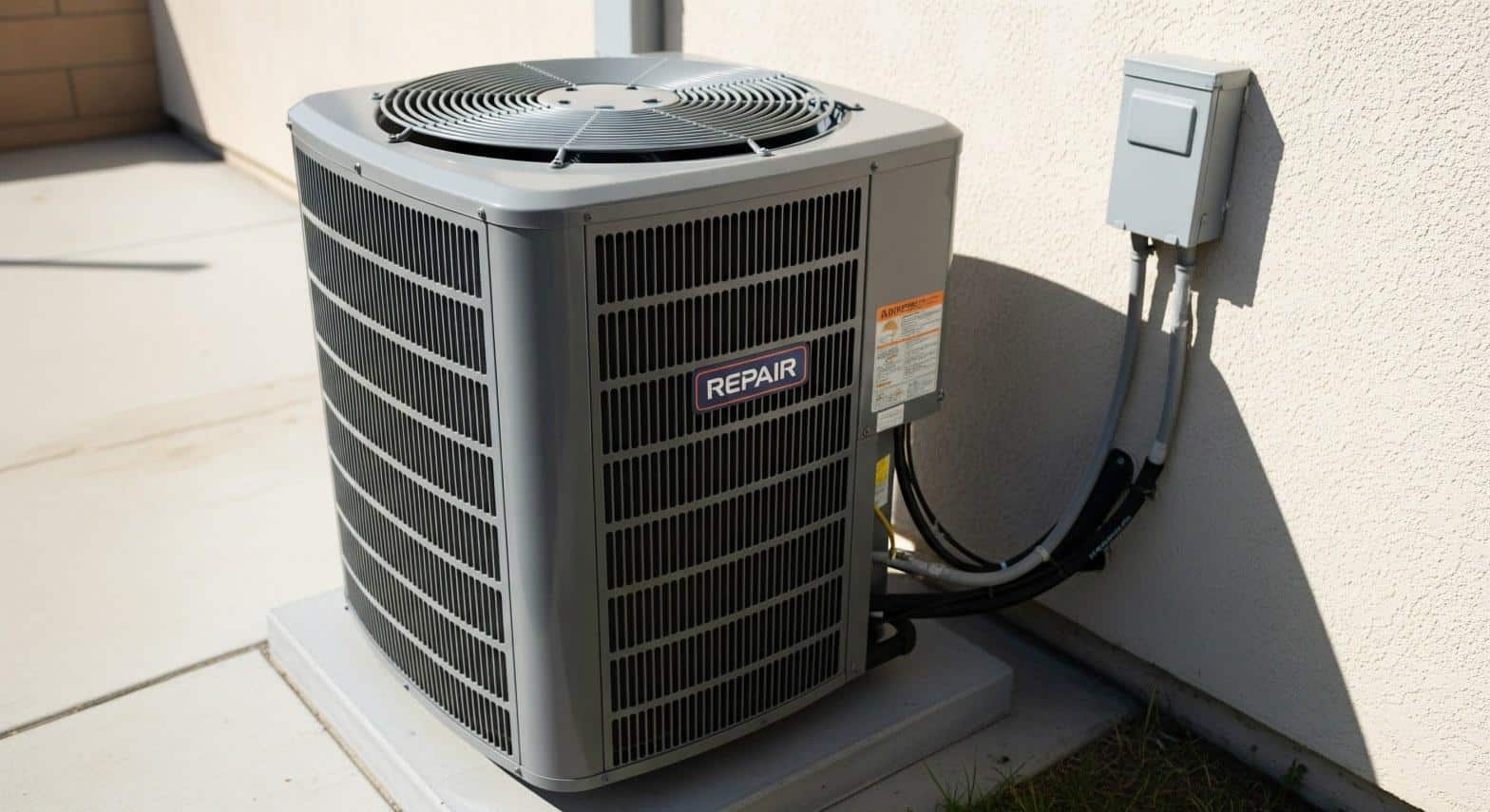
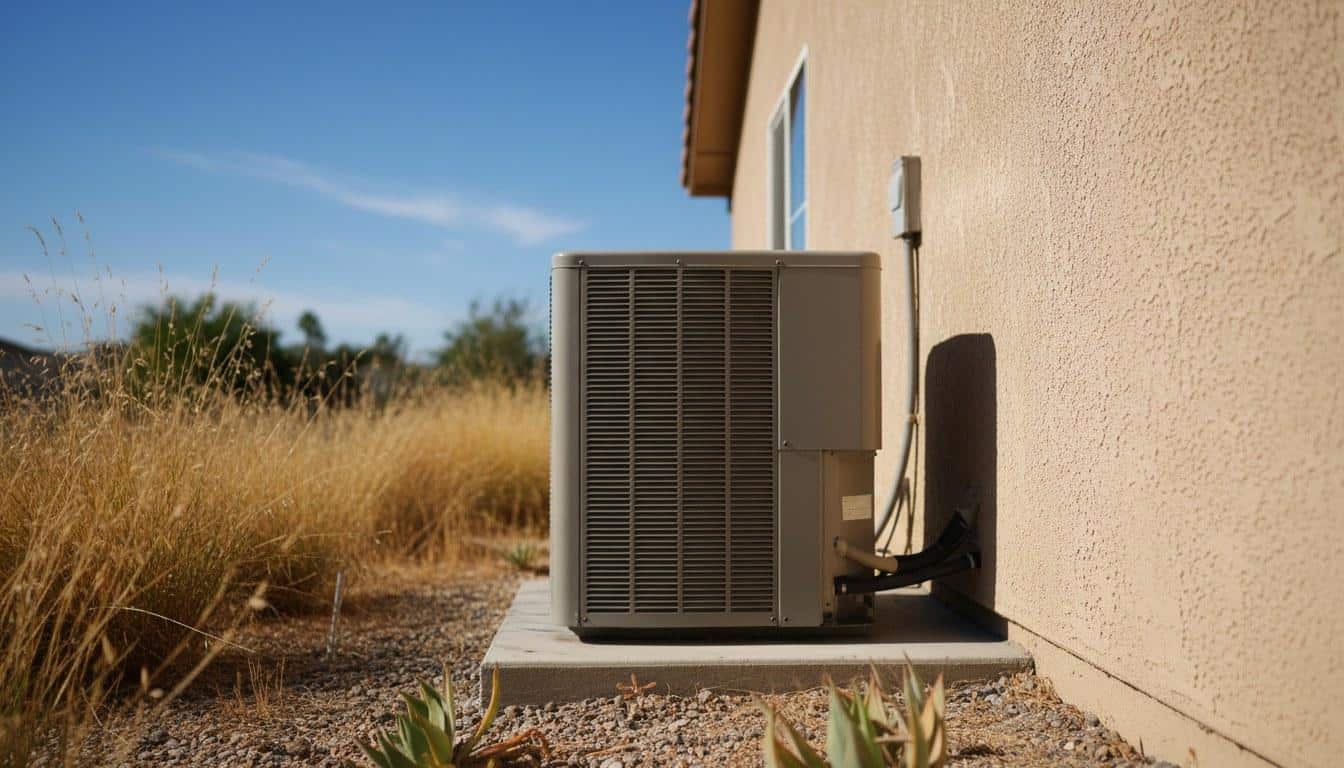
Walk outside and look at the condenser (the large metal box, usually on a concrete pad beside the house). Make sure no debris — leaves, cardboard, or overgrown shrubs — is blocking the sides or top. The unit needs at least 2 feet of clearance on all sides for proper airflow. If the condenser fan is spinning but the unit feels ice cold to the touch on a hot day, turn the system off and call for service — ice on the outdoor unit means a refrigerant or airflow problem that needs a technician.
Step 5: Check the Condensate Drain Line
The condensate drain line (the small PVC pipe that carries moisture out of the air handler) can clog with algae over summer. A clogged drain causes water to back up into the drain pan, which can trigger a float switch that shuts the system off. Find the drain line exit — usually near the outdoor unit or through a wall — and pour a cup of distilled white vinegar into the access port on the indoor air handler every 90 days to prevent clogs.
When Should You Call a Professional for AC Repair in Norwalk?
Call a licensed HVAC technician when DIY steps do not restore cooling within one cycle, or immediately if you smell burning, see ice on the unit after replacing the filter, or hear grinding from the compressor. These symptoms point to issues that require specialized tools or refrigerant handling.
Under EPA refrigerant regulations (Section 608), only certified technicians are legally permitted to handle, recover, or recharge refrigerants like R-410A or the newer R-454B. Attempting a DIY refrigerant recharge with a store-bought kit is illegal for sealed home systems and can void your equipment warranty. As of 2024, California has also tightened enforcement of refrigerant record-keeping under its own Air Resources Board rules, so always ask your tech for a service record when refrigerant work is done.
Our technicians respond to roughly 3 times more emergency AC calls in July and August than in any other two-month period across Norwalk — the majority involve capacitor failures on Carrier and Goodman units that are more than 12 years old. A capacitor (the cylindrical component that gives the compressor and fan motors their starting boost) costs relatively little to replace but will cause the compressor to burn out if left unaddressed, turning a minor repair into a major one.
You should also call a pro if your system is more than 15 years old and showing multiple symptoms at once. At that age, a repair-versus-replace conversation makes sense. New systems must meet California’s Title 24 building energy standards and carry a minimum SEER2 rating of 15.2 for split systems in Southern California’s climate zone. A technician can run a proper Manual J load calculation to make sure any replacement is correctly sized for your home — an oversized unit short-cycles and an undersized one never catches up on hot days.
What Does a Pro Actually Do on an AC Service Call?
A standard diagnostic service call for ac repair norwalk typically takes 60 to 90 minutes and covers both the indoor air handler and the outdoor condenser. Here is what a licensed technician checks:
- Electrical measurements: The tech checks voltage and amperage at the capacitor, contactor, and compressor to spot components drawing outside their rated range.
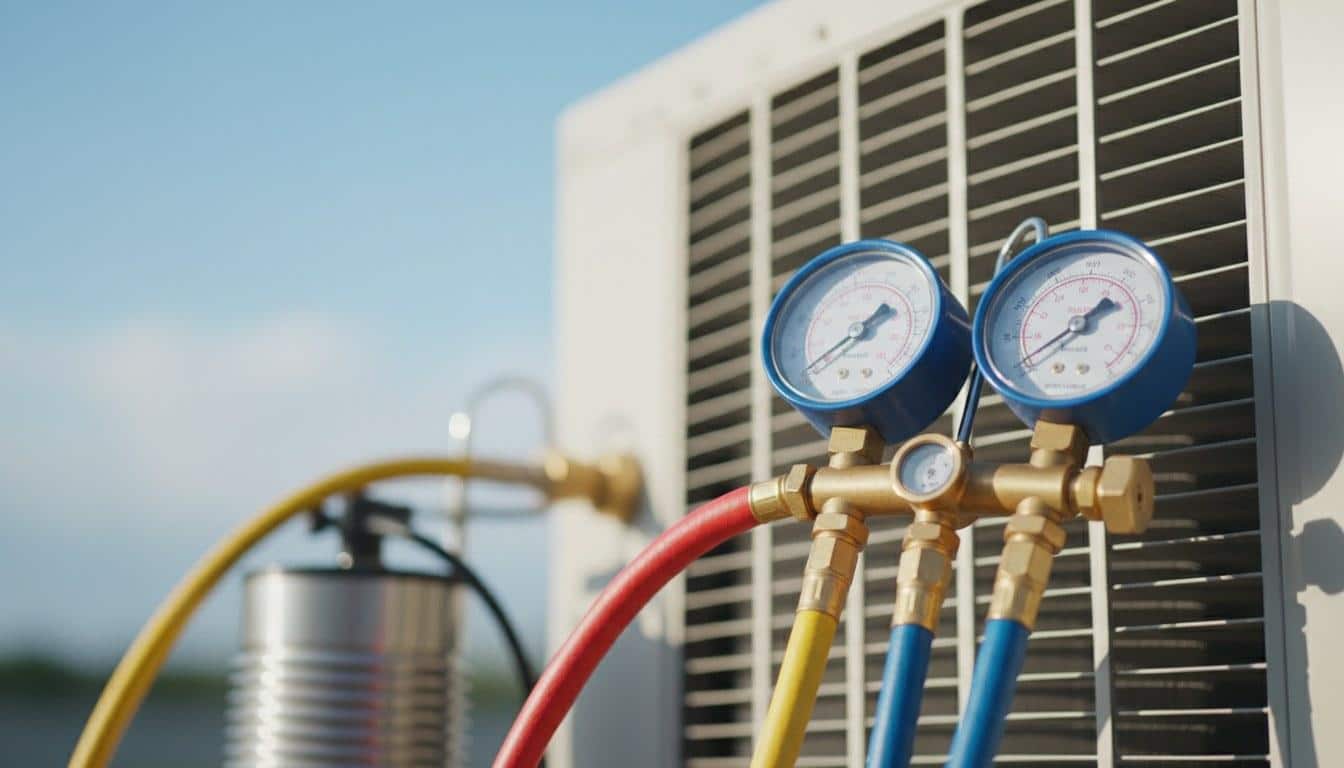
- Refrigerant pressure test: Using manifold gauges, the tech checks the system’s operating pressures against the manufacturer’s spec. Low pressure confirms a leak; high pressure can mean a blocked coil or overcharge.
- Coil inspection and cleaning: Both the evaporator coil (indoor) and condenser coil (outdoor) are inspected for dirt, corrosion, or bent fins. A dirty evaporator coil can reduce system efficiency by 20 to 30 percent.
- Blower motor and belt check: The tech measures motor amperage and inspects the belt or direct-drive coupling for wear.
- Condensate drain flush: The drain line is cleared and treated to prevent algae regrowth.
- Thermostat calibration: The tech confirms the thermostat is reading and responding accurately.
- Temperature split test: The tech measures the temperature difference between return air (air going into the system) and supply air (air coming out of the vents). A healthy split is typically 16°F to 22°F. A split below 14°F points to a refrigerant or coil problem.
For homes in the Norwalk Hills area and the Civic Center corridor, where many properties have original ductwork from the 1970s and 1980s, a tech may also do a quick duct leakage check. Leaky ducts can waste 20 to 30 percent of conditioned air before it ever reaches the living space. For more on keeping your system in peak shape between service calls, see our guide on AC maintenance tips to prevent costly breakdowns in Norwalk.
Leaky ducts can waste 20 to 30 percent of conditioned air before it ever reaches the living space.
In terms of market pricing context: diagnostic service calls in the Southern California market typically range from $75 to $150. Capacitor replacements generally run $150 to $300 parts and labor. Refrigerant leak repairs and recharges typically range from $300 to $600 depending on the refrigerant type, leak location, and labor scope. Full system replacements for a standard 3-ton split system in this market generally range from $4,500 to $8,500 installed, depending on equipment brand, SEER2 rating, and any ductwork modifications required. The Inflation Reduction Act federal tax credit offers up to 30 percent back on qualifying high-efficiency heat pump systems installed as of 2023, which can significantly offset replacement costs. Contact Shalom Heating & Air for a custom written quote specific to your home and equipment.
Get AC Repair Help in Norwalk Today
Run through the DIY checks above first — filter, thermostat, breaker, and condenser clearance. If the system still is not cooling after those steps, schedule a diagnostic before the summer rush hits and appointment slots fill up.
Shalom Heating & Air serves all Norwalk ZIP codes including 90650, 90651, and 90652. The team is Licensed by the California Contractors State License Board (CSLB) and handles everything from a simple capacitor swap to a full system replacement that meets California’s Title 24 building energy standards.
Call (714) 886-2021 to book your AC diagnostic or request a written quote for ac repair norwalk. Same-day and next-day appointments are available across Norwalk. Do not wait until the first 100-degree day to find out your system has a problem.
Frequently Asked Questions
How much does it usually cost to repair an AC unit in Norwalk?
AC repair costs in Norwalk, CA depend heavily on what part has failed. Diagnostic calls in the Southern California market typically run $75 to $150. A capacitor replacement generally costs $150 to $300 parts and labor, while a refrigerant leak repair and recharge typically ranges from $300 to $600. For a precise number on your specific system, contact Shalom Heating & Air at (714) 886-2021 for a written quote.
Why is my air conditioner blowing warm air even though it is running?
Warm air from a running AC usually means the system is low on refrigerant, has a dirty evaporator coil blocking heat transfer, or has a failing compressor. Start by replacing the air filter and checking that the thermostat is set to COOL. If the air is still warm after 20 minutes, the problem is most likely refrigerant-related and requires a licensed technician — refrigerant handling is regulated under EPA Section 608 and cannot be done as a DIY repair.
How do I know if my AC compressor needs replacing or just repairing?
A compressor that makes a grinding or hard-starting noise, draws excessive current on a clamp meter, or fails to build refrigerant pressure on both sides is a strong candidate for replacement. If the unit is older than 12 to 15 years, replacing just the compressor often does not make financial sense because other components are near end-of-life too. A technician can measure the compressor's electrical draw and compare repair cost against the price of a new system to help you decide.
Why does my AC keep tripping the circuit breaker in my Norwalk home?
A breaker that trips repeatedly means the AC is drawing more current than the circuit is rated for. The most common causes are a failing run capacitor, a seized compressor trying to start under load, or a short in the wiring. Resetting the breaker once is safe, but if it trips again the same day, shut the system off and call a professional. Continuing to reset a repeatedly tripping breaker risks damaging the compressor beyond repair.
How often should I have my AC serviced in Norwalk, CA?
Most HVAC manufacturers and the U.S. Department of Energy recommend a professional AC tune-up once a year, ideally in early spring before the first heat wave. In Norwalk, where Santa Ana wind events coat condenser coils with dust and marine-layer moisture accelerates corrosion, annual service is especially important for systems older than 10 years. Between professional visits, replace your air filter every 30 to 60 days during heavy cooling season.